
The story behind the tribute
Swansea Jack: The Dog Who Saved Twenty-Seven Lives
A remarkable life. A lasting bond. A story that deserves to be remembered.
The life behind the tribute
Remember Swansea Jack.
Nobody believed a dog had pulled a drowning boy from a Welsh river, until, a few weeks later, he did it again in front of a crowd, and the whole town finally understood what they had.This is the story of Swansea Jack, a black retriever from the Welsh docks whose repeated water rescues made him one of the most decorated dogs in British history, and whose name is still used today, generations later, as a nickname for the people of his hometown.
A life by the river
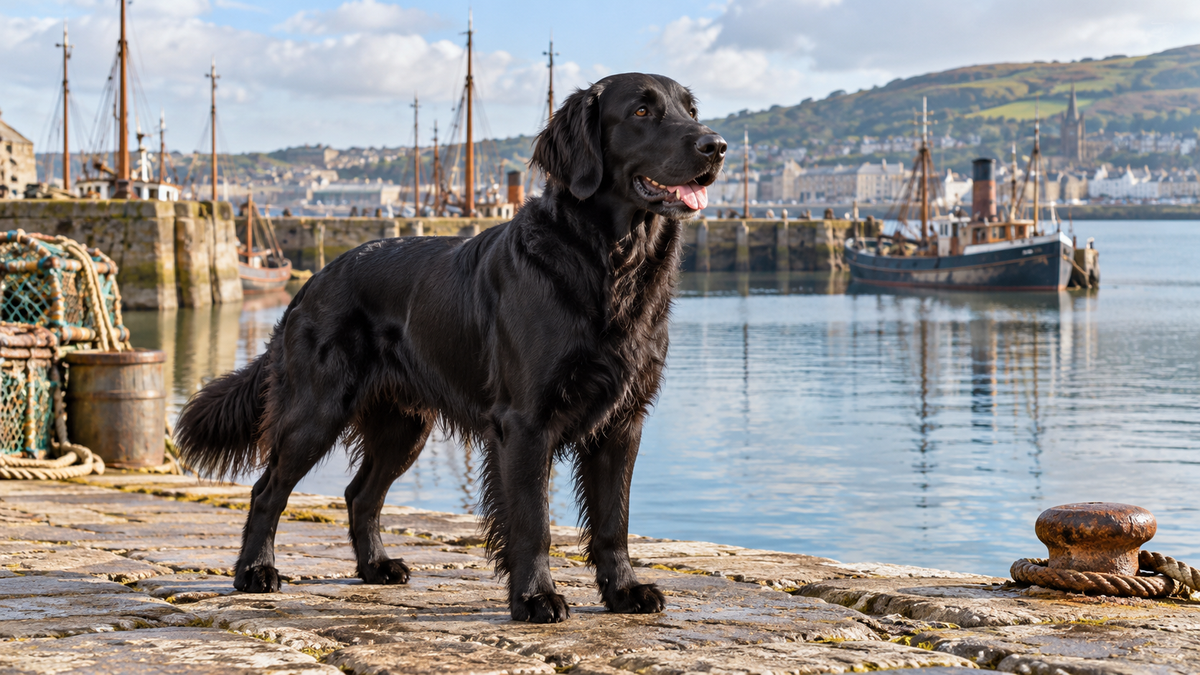
Jack, a black retriever, was born in 1930 and lived by the docks in Swansea, Wales, with his owner, William Thomas. Their home looked out over the river that ran through the town, the same stretch of water where local children swam every summer in the way children in riverside towns always have, water that, like any tidal river subject to currents and sudden depth changes, could turn dangerous very quickly for anyone caught by it unexpectedly.
The first rescue nobody believed
In June 1931, a twelve-year-old boy was swimming in the river when he suddenly went under and didn't come back up on his own. Jack, nearby at the time, saw it happen. He dived straight into the water, caught hold of the struggling boy, and dragged him bodily to the riverbank, almost certainly saving his life.
Remarkably, in the retelling at the time, nobody formally wrote the rescue down, and few who heard about it secondhand actually believed that a dog had done what was being described. It sounded, to anyone who hadn't witnessed it directly, like exactly the kind of story that gets exaggerated or invented in the retelling around a small town.
The rescue that changed everything
A few weeks later, a grown man was drowning in the Swansea docks. This time, critically, a crowd of onlookers was watching the whole thing unfold. Jack jumped in once again and pulled the man bodily out of the water, in full view of dozens of witnesses who could not later doubt what they had personally seen.
After that second, publicly witnessed rescue, the whole town believed what had previously sounded like exaggeration. From then on, whenever someone shouted for help from the water anywhere in Swansea, people started specifically looking for one particular black dog. More often than not, by the time they looked, he was already there, in the water.
A pattern repeated, again and again
Children who had wandered too far out. Swimmers caught by unexpected currents. Men who had slipped and fallen from the working docks. Jack kept answering the same essential call, over and over across his short life, in whatever conditions the river and the docks happened to present on any given day. The town eventually presented him with a silver cup and formally named him the bravest dog of the year in a public ceremony. He went on to become the only dog ever awarded two separate bronze medals by Britain's National Canine Defence League, a distinction that has never been repeated since.
By the time anyone made a serious attempt to total up the figure, Jack was credited with having saved at least twenty-seven people, and, according to some contemporary accounts, two dogs as well, from drowning over the course of his working life.
A life worth remembering
An ordinary dog can leave an extraordinary legacy.
A sudden, unexplained end
In 1937, Jack ate rat poison, a substance in common use around docks and warehouses at the time to control vermin. Whether his death was a tragic accident or something more deliberate was never conclusively determined. He was only seven years old at the time, still well within what would normally have been the prime of his working life.
A memorial, and a nickname that stuck
The town of Swansea paid for a permanent memorial to Jack on its seafront, a monument that still stands there today, decades later. And in one of the more unusual legacies a dog has ever left behind, some local historians trace the long-running nickname for the people of Swansea, "Swansea Jacks", directly back to him: a town, in effect, quietly naming its own people after the dog who kept jumping into the water whenever it truly mattered.
He never waited to be asked
Every single rescue Jack made, across his short working life, he made entirely on his own initiative, without a whistle from his owner, a shouted command, or anyone deliberately sending him into the water after a person in trouble. He simply saw someone in danger and went in after them, every time. It is a simple enough instinct to describe in a single sentence, and an extraordinarily rare one to actually live out, again and again, over just seven short years beside a Welsh river.
An award with very few holders
The bronze medal Jack was awarded twice over by the National Canine Defence League, now known as the Dogs Trust, recognized documented acts of lifesaving bravery by dogs across Britain, and the vast majority of recipients over the charity's long history received the honour only once in their lifetime. Jack's second award, confirming the organization's willingness to formally recognize a pattern of repeated, sustained heroism rather than a single isolated incident, set a precedent that is still referenced in accounts of the award's history today, and remains, to date, unmatched by any other dog in the charity's records.
A legacy carried in a town's own name for itself
The informal use of "Swansea Jack" as a nickname for people from the city predates some written records of Jack's own life, and historians disagree over exactly how directly the phrase traces back to the dog specifically versus an older, broader regional usage referring to Swansea sailors and dock workers more generally. What isn't disputed is that Jack's fame, arriving at a moment when the nickname was already in some local circulation, helped cement and popularize it well beyond Swansea's own borders, turning a regional colloquialism into something closer to a recognized piece of Welsh cultural history, inseparable in most retellings from the story of the dog who gave it fresh meaning.
Industrial docks, and the risks they carried
Swansea in the 1930s was a major industrial port, its docks busy with shipping and heavy equipment, and the surrounding waterways carried genuine, well-understood risks for anyone who fell in unexpectedly, strong currents, cold water, and the sheer difficulty of climbing back out along hard dock walls not built with swimmers in mind. Drownings in and around working ports were a recognized hazard of the era, which is part of why a dog capable of repeatedly intervening in exactly these conditions drew such intense local gratitude. Jack wasn't simply swimming in a calm, controlled stretch of river; the docks he frequently worked in were functioning industrial waterways, adding real additional risk to every rescue he made there.
A memorial that has outlasted the docks he knew
Much of the working waterfront Jack would have recognized in the 1930s has since been redeveloped, as Swansea's docklands transitioned away from heavy industrial shipping toward the mixed residential and leisure use common to many former British port cities today. His seafront memorial has remained in place throughout that transformation, maintained by the local council as a fixed point of civic history even as the working river and docks around it changed almost completely, a small, consistent marker connecting the modern city to the specific stretch of water where a young black retriever once made a habit of jumping in whenever someone needed him to.
A short life measured against an unusual record
Jack's death at seven years old came well before most dogs of his general type and size would be considered elderly, which adds a particular weight to the sheer number of rescues attributed to him within such a compressed working life. Most of the documented rescues took place over roughly six active years, meaning that on average he was credited with a life saved at a pace few working or companion dogs anywhere in recorded history have matched, a density of recorded heroism that local historians have pointed to as a key reason his story, unlike many similar local legends from the period, survived so clearly and so consistently in Swansea's civic memory.
Remember the name
Swansea Jack at a glance
- Breed: Black retriever
- Born: 1930, Swansea, Wales
- Owner: William Thomas
- Known for: Rescuing at least twenty-seven people (and two dogs, by some accounts) from drowning in the River Tawe and Swansea docks
- Honors: The only dog ever awarded two bronze medals by the National Canine Defence League
- Died: 1937, at seven years old, after ingesting rat poison
- Legacy: A memorial stands on the Swansea seafront; "Swansea Jack" remains a nickname for the city's people
Further reading: The story of Swansea Jack, the dog who saved 27 lives, WalesOnline, Swansea Jack, BBC Wales
Love Swansea Jack's story? Shop the Swansea Jack Sweatshirt and bring it home.
The story stays with us
Remember Swansea Jack.
Explore the tributes inspired by Swansea Jack's story, or meet another dog whose life deserves to be remembered.